



































The complete set of 198 Hints are available in paperback from the CYC-Net Press store.
 Listen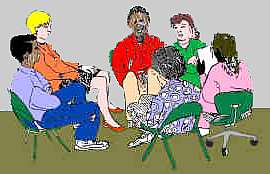
It was back in the days when planning meetings became smoky from all the pipes and cigarettes. The five of us who were working with Gregory were just ending one of those long, late afternoon sessions – reporting back, catching up on triumphs and disasters, filling in information gaps, hypothesising about what the underlying issues might be, listening to how he was feeling and how he was managing, working out ways to limit damage, deciding on what we should work towards in the coming days, settling on who would do what ...
As we got up, looking at the scribbled diagrams and lists we had left on the blackboard, and rushing to open some windows, Meg remarked: "What a pity Gregory wasn't here with us!" She was so right. Had the boy himself been included in such a meeting, he would have had a remarkable picture of how seriously we approached his "case" in our program – and we could have gained some first-hand knowledge and understanding from his view of things! We were going to share much of our discussion with him anyway, but somehow we hadn’t yet tumbled to the good sense of including clients in our planning.
25 years ago Dahms (1977), writing about difficulties with treatment planning at Starr Commonwealth at the time, wrote: "Boys did not understand their treatment plans. Many did not even know that there were such things ... boys did not feel a sense of purpose and direction. They were unsure of which issues had been resolved and which were yet to face them ..."
Without thinking, many of us continue to keep much of this sort of discussion to ourselves, reluctant to talk with kids rather than about them, embarrassed perhaps to be more up front about our hopes and fears for them. We short-change the youngsters and ourselves when we maintain this "professional split" in our work.
In our practice today we remember that an essential
aspect of the Child and Youth Care "curriculum" is facilitating
self-awareness, self-expression and self-determination. Including kids in
discussion and planning about their own lives is 100% on target for such
experience and teaching.
Reference
Dahms, W.R. (1977) A task-centered approach to treatment planning. Child
Care Quarterly, 6.3, p.197


