



































The complete set of 198 Hints are available in paperback from the CYC-Net Press store.

 Listen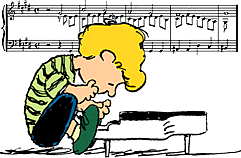
If, like most of us, you have only one voice, then you can sing a melody – a line of single notes which make up a tune. If there are two of you, you have two voices to play with. With two voices ...
(a) one person can sing the original tune and the second person might join in with the same tune, which just makes the whole performance louder. We call this singing in unison, like when we are singing together to cheer on our sports team. Or ...
(b) the second voice can sing a different tune, a tune which balances the first, or contrasts with it, or supports it, or adds interest to it. If you have three voices, then the music we can make becomes even more complex and fascinating – or (gasp!) four voices ...
In music composition, this art of adding new tunes to an original theme is called counterpoint. It allows two or more people to sing together, and although they may sing different tunes, we say that they are singing in harmony. It offers a good analogy for Child and Youth Care practice.
We easily recognise some of the familiar "tunes" which kids "sing" in our program, like: Nobody cares about me; I’m feeling great today; I’m sick of the whole darned place; I’m gonna make the team; I don’t care what you tell me; I wanna be left alone ... If a youngster is singing the I’m feeling great today tune, we can simply add our voice in unison and sing alongside and make it louder. We "sing": Me too, buddy! The I’m gonna make the team tune is the same: Let’s hear it for Trish who is feeling confident about her chances.
But when things are less positive, some kids might sing the same "tune" for weeks on end, and others don’t quite know how to deal with this. We can add counterpoint by adding a second "tune": our tune may not be exactly the same as theirs, but we have been through tough times and we know what it’s like and our tune can be an accompaniment for the lonely kid or a support for the scared kid. When someone is singing the I wanna be left alone tune we can sing (by our words and deeds): Hey I know what that feels like and how would you like me to bring you something to eat in your own space today? We may be tempted to sing You’ve got the words and the music wrong there – here is the right way to sing it, but this fails the empathy test, the harmony test. Humming alongside passes the understanding test and the reassurance test which sings: Yes, people do get to feel that way, don’t they?
One kind of counterpoint is the fugue where a strong and simple melody starts out alone, but then spawns echoes and increasingly intricate reverberations. So, when occasion demands, it is we who can start a new direction and proactively introduce the fugue theme: when the group is down we can "sing": What shall we do Saturday? What shall we eat tonight? Who’d like a run around the field? If we can get a three-part fugue going out of that, we’ve done well.
A major purpose of building relationships with kids is that we get to spend time alongside them, where we can listen to their tunes and add new voices, sustaining voices, alternative voices; where we can counterbalance their sadness with lighter rhythms, and trade in their minor chords for major chords. In our practice today we will listen to the melodies, and know when to sing along in unison, when to balance harsh dissonances with softer and slower voices; when to offer new and different possibilities of harmony and counterpoint.


