



































The complete set of 198 Hints are available in paperback from the CYC-Net Press store.
 Listen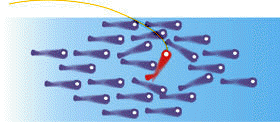
A school of fish are following a course through the sea. Guided by instinct or their leaders, or both, they are moving to a place and to fulfil a purpose which they "know" is right. The formation in which they swim is part of this instinct – it is a formation which keeps them safe, on proper course, and conserves energy. They are acutely attuned to the movements of the fish ahead and alongside, and they accommodate to any change of course or depth in an instant.
Suddenly, a fish in the school is taken by the hook of a fisherman. Its personal instinct is to survive, to avoid this threat, and he begins to thrash about trying to rid himself of the hook – of which his fellow fish are unaware and which he does not himself understand. The other fish react instantly. The hooked fish is behaving irrationally. The others see his behaviour as a danger. It threatens to break the cohesiveness of the group, to slow them down, to scatter the group and expose its members. Their response is to attack the "rogue" fish and to neutralise its threat. Their instinct is to sacrifice the "troubled" fish and to restore the equilibrium of their safe formation.
In our practice today we know that we will come across "rogue" kids who are struggling with stuff which we often don't know about and which we find hard to understand. Only that they know they are in serious trouble or crisis, and are struggling to survive. More, they become rejected, scapegoated and attacked by the rest of the group who have troubles enough of their own. Our task is on two fronts: one, to find meaning for the troubled individual kid, and two, to maintain the function of the group – so that we can eventually get everyone back together again.


