



































The complete set of 198 Hints are available in paperback from the CYC-Net Press store.


 Listen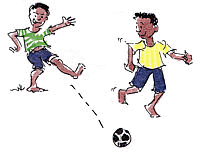
We often use the metaphor of ball games in talking about initiative and responsibility. "The ball is in your court", "kicking the ball into play", and "Aim for the goal."
The learning of life skills has many parallels with ball games. In most games the player has to learn the generic skills (like catching, throwing, batting, kicking, trapping, hitting, passing …) as well as the strategic skills, namely using the ball as part of a team effort in winning the game. The test of our generic skills lies in our ability to use the ball in a real-time game situation.
Much of our child and youth work lies in teaching kids to generalize new learning to the wider situations of real life. The effectiveness of our teaching lies in its usefulness back home. And as their "coaches", we provide situations for youngsters to put into practice the insights, controls and skills which we have taught.
But we are careful to grade these situations so that success is achievable – that is not to say that they are so easy as to require little or no effort; nor so difficult that we set youth up for failure.
A nice analogy from the game of soccer is that a player will pass the ball – not to a fellow player – but to a point which that fellow player can reach and from where he can do something strategically useful with it.
In our practice today we will avoid setting repetitive
expectations for children and their families which require no growth beyond
yesterday’s levels of ability, and we will avoid excessive demands which we
know they cannot meet. We will always pass the ball just a little ahead
of them, so that they must run for the ball and be able to so something
different and new and interesting with it.


