



































CANADA
A lament for the kids who can't read good
Kids these days! Ask them a question and they respond in hieroglyphics – OMG, LOL, FTW. When they toss in a few real English words, they can barely manage to spell them. You're lucky if they hear you at all, they're so plugged into their iPods. They're just so ... dumb.
That, in any case, is the central whine of a glut of new books that lament the decline of the collective IQ of university students, placing the blame for a narcissistic culture obsessed with Lindsay Lohan and Are You Smarter than a Fifth-Grader? squarely at the feet of the youngest among us. According to a number of commentators, students are getting dumb and dumber: Growing up in an age of text-messaging and blogs, they are unable to write essays or form coherent arguments. Raised on the mantra of listening to their "feelings," they are unable to make objective judgments, but have such high self-regard that they couldn't care less.
The titles of this litany of new books paint a frightening picture: there's Mark Bauerlein's 2008 tome The Dumbest Generation: How the Digital Age Stupefies Young Americans and Jeopardizes Our Future*, which repeats something many professors have long suspected: Electronic devices have created a generation with no attention span and terrible language skills. It joins Just How Stupid Are We?: Facing the Truth About the American Voter (2008), by Richard Shenkman, Al Gore's 2007 The Assault on Reason, and many others. According to an article last month in The Chronicle of Higher Education, such titles are symptomatic of trends that can be seen in the classroom, from bad grammar to inattention. This might be cause for alarm – if only so many Canadian university professors and students alike were not saying the opposite.
"I've been teaching for 12 years in three different provinces, and I don't see a decline," says University of Toronto professor Nick Mount, who teaches a first-year course that introduces students to what he calls a "banquet" of Western authors. "I meet first-year students, and I see them wanting to learn. I don't see students whose minds are closed." He also points out that, despite their popularity in the past couple of years, such complaints are not new.
Last year marked the 20th anniversary of the publication of Allan Bloom's The Closing of the American Mind, the book that initially set off an explosion of debates about the university and its role in modern culture. Bloom charged that by popularizing the notion that all ideas are made equal, U.S. academics were fostering not intellectual openness or daring among students, but intellectual indifference. The nation's younger generation was growing up in a relativistic universe where there was no need to test ideas against one another.
While Bloom's tome attacked the contemporary university from a conservative point of view, many of today's books complaining about the anti-intellectual climate are coming the other side.
American author and past writer for The New York Times and Mother Jones, Susan Jacoby is hardly a conservative, but her book The Age of American Unreason*, which appeared this year to great acclaim, also criticizes declining educational standards, as well as junk science and identity politics, for leading to a hostility toward rational thought in the U.S. Many liberal authors have taken the same stance.
But if this is the argument, Mount hasn't heard of much data to support it. "My first rejoinder is that statistically speaking, Canadian students are more educated" now than ever before, he says. "They're staying in school longer and more are going to school."
Mount also argues that if students aren't learning how to make sustained arguments or engaging sufficiently with great ideas in university, this may have something to do with the transformation of universities into degree factories rather than institutes of detached contemplation. Garry Leonard, an English professor at the University of Toronto at Scarborough, doesn't buy the argument that young people are stupid or unengaged. The teacher of a wildly popular first-year course on 20th-century literature, he has seen cohort after cohort of 18-year-olds become passionate about canonical authors such as James Joyce and Joseph Conrad.
Mount jokes that it will always be in the interests of professors, writers and journalists to lament that people aren't reading, learning or studying as much as they should be. He also points out that such complaints often hide a moralistic discomfort. "In England in the 18th century, clergy and teachers were worried young people weren't reading their Bibles anymore, they were reading novels instead," says Mount. "They couched this in a literacy debate. What they were really worried about is that there's a different moral code in those books than in the Bible.
"We're doing the same thing," he says pointedly. "Now we say, `Johnny can't read because he's spending too much time on the Internet.' It's (really), `What is Johnny reading on the Internet?'"
Sarah Barmak
13 September 2008
* These books are in our bookstore. Click on a flag:
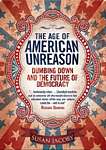


The Age of American Unreason by Susan Jacoby
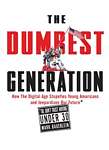
The Dumbest Generation by Mark Bauerlein


