



































The latest and greatest books on how to raise your children
Whether you have a newborn, toddler or teen, you know parenting isn't easy. But the latest crop of guidebooks will remind you that you're not alone in your challenges and joys. Here's a look at five of the best new parenting guides to hit bookstore shelves.
Some are funny. Some are serious. Some are for parents of older kids. Some are for newbies, dealing with wee ones. All offer savvy advice for any mother or father who's looking to learn just a little more about what it means to be a parent.
(These books are in our bookstore – Eds.)
_____

The Canadian Paediatric Society Guide To Caring For Your Child From Birth To Age Five by Diane Sacks (Wiley, $29.95)
 (Please click on the flag)
Written by a practising pediatrician, this big book claims to be the "complete parenting guide from Canada's leading child and youth experts." That may be a bit boastful, but still, this guide is filled with advice, charts and myth-busting information that will take some of the stress out of raising kids.
A tip from the book: "Make an appointment to see your child's doctor if (your child) is still having frequent tantrums after the age of four ... if the tantrums occur because your child doesn't understand what's expected of (him or) her or the consequences of not behaving; the tantrums are accompanied by headaches or stomach aches, nightmares, refusal to eat, clinging or extreme anxiety or irritability."
_____
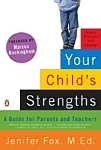
How To Discover And Develop Your Child's Strengths: A Guide For Parents And Teachers by Jenifer Fox (Penguin, $16.50)
 (Please click on the flag)
A teacher, Fox wrote this book partly because she says we live "in a world that is obsessed with remedying weaknesses .... Most people have no idea what their strengths might be, yet they are painfully aware of their failures." She is determined to change that, with this interesting and insightful book.
A tip from the book: "Don't demand obedience without allowing for questions. Work to discover ways to inspire your child to a greater good. Recognize your child's uniqueness, even if the unique qualities seem bothersome."
_____
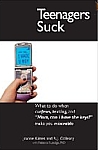
Teenagers Suck: What To Do When Missed Curfews, Texting And "Mom, Can I Have The Keys?" Make You Miserable by Joanne Kimes and R. J. Colleary with Rebecca Rutledge (Adams Media, $11.99)
 (Please click on a flag)
A comedy writer, Kimes has written 10 previous "Sucks" books, making her a pro at what to do when life hands us lemons; Colleary is a parent of three. Maybe not the most useful book for anyone whose kids have serious behavioural issues, but for parents who are just sick of having teenagers in the house, this book may help ease the pain (and make you laugh).
A tip from the book: "If your teenager has gone wacky with their hair, they will definitely want to flaunt it in front of you to get a reaction, what with that being the point and all. Don't fall for it. Instead, torture them by giving them a disinterested reaction, 'Hmm, did you do something with your hair?'"
_____
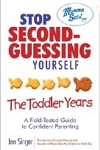
Stop Second-Guessing Yourself: The Toddler Years, A Field-tested Guide To Confident Parenting by Jen Singer (Health Communications Inc., $19.95)
(Please click on a flag)
If you're a parent, you'll probably laugh out loud when you read this book -- but you'll learn a thing or two, too. Most importantly, you'll be reminded that a) you aren't alone and b) you'll get through it. Eventually. The book is also full of tried-and-true advice from real parents.
A tip from the book: "Remember, you're not just a mommy, but a woman, too a woman who would probably love to see a movie that's not animated with talking elephants for a change .... "
_____
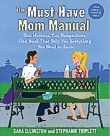
The Must-Have Mom Manual: Two Mothers, Two Perspectives, One Book That Tells You Everything You Need To Know by Sara Ellington and Stephanie Triplett (Ballantine Books, $20)
(Please click on a flag)
New mothers will crack up through this book, which is written in the style of The Girlfriend's Guide To Pregnancy. The premise behind the manual? "There is no one right way to be a mom." The two authors go back and forth on all kinds of questions, from leaving your kid in the car ("just for a second") to modern-day parenting ("Are we busier than our moms were, or just bigger whiners?").
A tip from the book: "Often the toughest part is just getting kids to even try new foods. Reward them for it with an extra story at bedtime, an extra check on their responsibility chart, or just about anything that's appropriate, except candy!"
_____
Shelley Boettcher
30 July 2009


