



































 Listen
Delinquent behavior has long been a serious and costly problem in American society. Although the U.S. delinquency rate has declined since the mid-1990s, it is still among the highest in the industrialized countries. To reduce delinquent behavior and improve societal well-being, it is essential to develop effective intervention programs. In turn, effective programs depend on a firm, scientific understanding of the origins of delinquency. The Office of Juvenile Justice and Delinquency Prevention's (OJJDP's) Program of Research on the Causes and Correlates of Delinquency constitutes the largest, most comprehensive investigation of the causes and correlates of delinquency ever undertaken.
For the past 17 years, the program, which consists of three longitudinal studies (the Denver Youth Survey, the Pittsburgh Youth Study, and the Rochester Youth Development Study) has contributed substantially to an understanding of delinquent behavior. This article summarizes a few of the many empirical findings generated by these studies and policy implications arising therefrom.1
The Studies
Each study uses a longitudinal design in which a sample of children
and/or adolescents was selected and then followed over time to chart the
course of their development. The studies oversampled youth at high risk
for serious delinquency; however, because the studies used statistical
weighting, the samples represent the broader population of urban
adolescents.
Denver Youth Survey
The Denver Youth Survey is based on a probability sample of households
in high-risk neighborhoods of Denver, CO, selected on the basis of their
population, housing characteristics, and high official crime rates. The
survey respondents include 1,527 children who were ages 7, 9, 11, 13, or
15 in 1987 and who lived in one of the more than 20,000 randomly
selected households. The sample of children includes 806 boys and 721
girls. These respondents, along with a parent or primary caretaker, were
interviewed annually from 1988 until 1992 and from 1995 until 1999. The
younger two age groups were reinterviewed in 2003. The sample is
composed of African Americans (33 percent), Latinos (45 percent), whites
(10 percent), and youth of other ethnic groups (12 percent). To date,
Denver researchers have studied subjects ranging in age from 7 through
27.
Pittsburgh Youth Study
The Pittsburgh Youth Study is based on a sample of 1,517 boys from
Pittsburgh, PA, selected in 1987- 88. To identify high-risk subjects, an
initial screening assessment of problem behaviors was conducted in the
first, fourth, and seventh grades of the Pittsburgh public school
system. Boys who scored above the upper 30th percentile for their grade
were identified as high risk, and approximately 250 of them were
randomly selected for followup, along with 250 boys from the remaining
70 percent. The subjects, parents or primary caretakers, and teachers
were interviewed at 6-month intervals for the first 5 years of the
study, although the fourth grade sample was discontinued after seven
assessments. Since the sixth year of the study, followups of the first
and seventh grade samples have been conducted annually. In the followup
period, researchers are studying data regarding the sampled youth from
when they were age 7 to their current age of 25.
Rochester Youth Development Study
The Rochester Youth Development Study is based on a sample of 729 boys
and 271 girls who were in the seventh and eighth grades (ages 13–14) in
the public schools of Rochester, NY, in 1988. The sample is composed of
African American (68 percent), Hispanic (17 percent), and white (15
percent) youth. Each student, along with a parent or primary caretaker,
was interviewed at 6-month intervals for the first 41/2 years of the
study. From ages 20–22, the subjects and their caretakers were
interviewed annually, and the subjects are currently being reinterviewed
at ages 28 and 30.
The Studies Collectively
These studies provide data on delinquent behavior from 1987 to the
present, and have included more than 4,000 subjects ranging in age from
as young as 7 to as old as 30. The samples have a strong representation
of serious, violent, and chronic offenders. To date, more than 100,000
personal interviews have been conducted, and volumes of additional data
from schools, police, courts, social services, and other agencies have
been collected.
The Causes and Correlates studies have addressed scores of different topics related to juvenile delinquency and juvenile justice. In the following pages, the authors summarize just a few of these many investigations. Some of the topics are specific to one of the projects; other topics are investigated with data from two or all three projects.
Patterns of Delinquency
The Causes and Correlates studies have provided descriptive data that
trace the onset and development of delinquency. Three key topics are
childhood aggression, developmental pathways to delinquency, and the
overlap of problem behaviors.
Childhood Aggression
The vast majority of the youth in the Denver and Pittsburgh studies
reported involvement in some form of physical aggression before age 13
(85 percent of the boys and 77 percent of the girls in Denver and 88
percent of the boys in Pittsburgh) (Espiritu et al., 2001). Well over
half (roughly 60 percent of both genders in Denver and 80 percent of the
Pittsburgh boys) reported such aggression before age 9. In addition,
approximately half of the Denver children (57 percent of the boys, 40
percent of the girls) and 32 percent of the Pittsburgh boys reported
more serious aggression in which the victim was hurt (bruised or worse),
and 47 percent of the boys and 28 percent of the girls in Denver and 14
percent of the Pittsburgh boys reported assaults that resulted in more
serious injuries to the victim (e.g., cuts, bleeding wounds, or injuries
requiring medical treatment).
As these findings indicate, aggression during childhood is quite common, although exactly how widespread depends on how aggression is defined. Involvement in aggression, however, is not necessarily extensive or long lasting. A substantial amount of delinquency, including aggression, is limited to childhood. For example, only about half (49 percent) of the Denver children involved in minor violence in which the victim was hurt or injured continued this behavior for more than 2 years. In fact, much aggressive behavior, and an even larger proportion of other delinquency, appears to be limited to childhood. However, a large proportion – about half – of aggressive children continue to be aggressive for several years into at least early adolescence. Exactly what distinguishes children who cease to be aggressive and those who continue remains to be determined.
Developmental Pathways
Childhood aggression that continues and escalates as individuals age
raises two key questions: Does the movement to serious delinquency
progress in an orderly fashion, and is there a single dominant pathway
or are there multiple pathways?
What distinguishes children who cease to be aggressive and those who continue?
The onset of minor aggression (e.g., arguing, bullying) tends to occur first, followed by the onset of physical fighting (including gang fighting), and then by the onset of other violence such as robbery or rape (Loeber and Hay, 1997). These results suggest that development toward serious forms of delinquency tends to be orderly.
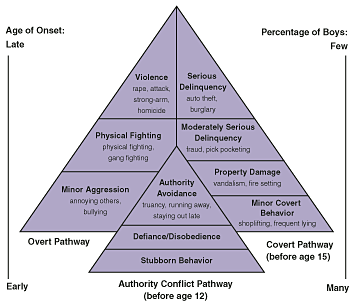
Initial research comparing single and multiple pathways found that a model of three distinct pathways (see figure 1) provided the best fit to the data:
The Authority Conflict Pathway, which starts with stubborn behavior before age 12 and progresses to defiance and then to authority avoidance (e.g., truancy).
The Covert Pathway, which starts with minor covert acts before age 15 and progresses to property damage and then to moderate and then to serious delinquency.
The Overt Pathway starts with minor aggression and progresses to physical fighting and then to more severe violence (no minimum age is associated with this pathway).
Figure 1: Developmental Pathways to Serious and Violent Offending
These results were replicated for African American and white boys in Pittsburgh across three age samples (Loeber et al., 1993, 1998). They have also been replicated in a sample of African American and Hispanic adolescents in Chicago and in a nationally representative U.S. sample of adolescents (Tolan, Gorman-Smith, and Loeber, 2000). Replications also have been successfully undertaken in the Denver Youth Survey and the Rochester Youth Development Study (Loeber et al., 1999).
As they became older, some boys progressed on two or three pathways, indicating an increasing variety of problem behaviors over time (Kelley et al., 1997; Loeber et al., 1993; Loeber, Keenan, and Zhang, 1997). Researchers found some evidence that development along more than one pathway was orderly. For example, aggressive boys committing overt acts were particularly at risk of also committing covert acts, but not vice versa. Further, conflict with authority figures was either a precursor or a concomitant of boys' escalation in overt or covert acts (Loeber et al., 1993). Also, an early age of onset of problem behavior or delinquency was associated with escalation to more serious behaviors in all the pathways (Tolan, Gorman-Smith, and Loeber, 2000). The pathway model accounted for the majority of the most seriously delinquent boys, that is, those who self-reported high rates of offending (Loeber et al., 1993; Loeber, Keenan, and Zhang, (1997) or those who were court-reported delinquents (Loeber, Keenan, and Zhang, 1997).
The pathway model shows that the warning signs of early onset of disruptive behavior cannot necessarily be dismissed with a “this-will-soon-pass” attitude (Kelley et al., 1997). However, it is not yet possible to distinguish accurately between boys whose problem behaviors will worsen over time and those who will improve. The pathway model is a way to help identify youth at risk and optimize early interventions before problem behavior becomes entrenched and escalates.
The Overlap of Problem Behaviors
The pathways analyses found that many delinquent youth, especially the
more serious offenders, engaged in multiple forms of delinquency. Many
youth who commit serious offenses also experience difficulties in other
areas of life. With the exception of drug use, however, little is known
about the overlap of these problem behaviors in general populations. Do
most youth who commit serious delinquent acts have school and mental
health problems? Are most youth who have school or mental health
problems also seriously delinquent?
The Causes and Correlates studies examined these questions in all three sites (Huizinga and Jakob-Chien, 1998; Huizinga, Loeber, and Thornberry, 1993; Huizinga et al., 2000). Recognizing that involvement in delinquency or in other problem behaviors can be transitory or intermittent, the studies examined the level of overlap of more persistent drug use, school problems, and mental health problems2 that lasted for at least 2 of the 3 years examined (Huizinga et al., 2000).
There was some consistency of findings for males across sites. Although a sizeable proportion of persistent and serious offenders do have other behavioral problems, more than half do not. Thus, it would be incorrect to characterize persistent and serious delinquents generally as having drug, school, or mental health problems. On the other hand, drug, school, and mental health problems are strong risk factors for involvement in persistent and serious delinquency, and more than half (55 – 73 percent) of the male respondents in all three sites with two or more persistent problems were also persistent and serious delinquents.
For females, the findings were different and varied by site. As with the males, fewer than half of the persistent and serious female delinquents had drug, school, or mental health problems. In contrast to males, however, these problems alone or in combination were not strong risk factors for serious delinquency. This result stems, in part, from the fact that a substantially smaller proportion of girls (5 percent) than boys (20–30 percent) was involved in persistent and serious delinquency, while their rates (within sites) of other problem behaviors were roughly similar to those of males.
It is important to note that these findings are for general population samples. Additional analyses of the Denver data found substantial differences between population findings and findings among youth who had been arrested and became involved in the juvenile justice system (Huizinga and Elliott, 2003). Among males who were persistent and serious offenders, 69 percent of those who had been arrested had one or more problems, whereas only 37 percent of those who had not been arrested had such problems. Although there were too few persistent serious offenders among females to permit control of delinquent involvement, 81 percent of the females who were arrested had one or more problems compared with only 1–2 percent among females who were not arrested.
Thus there appears to be a concentration of offenders entering the juvenile justice system who have drug use, school, or mental health-related problems. Accordingly, the capability to identify the particular configuration of problems facing individual offenders and provide interventions to address these problems is critical to the effectiveness of the juvenile justice system.
Two Key Risk Factors for Delinquency
The Causes and Correlates studies have investigated a host of risk
factors involving child behavior, family functioning, peer behavior,
school performance, and neighborhood characteristics that precede and
potentially lead to delinquency. Findings on just two topics – child
maltreatment and gangs – are summarized here.3
Child Maltreatment
Prior research indicates that child maltreatment (e.g., physical abuse,
sexual abuse, neglect) that occurs at some point prior to age 18 is a
risk factor for delinquency (Widom, 1989; Zingraff et al., 1993). This
relationship was also observed in the Pittsburgh and Rochester studies
(Smith and Thornberry, 1995; Stouthamer-Loeber et al., 2001, 2002). In
the Rochester study, for example, Smith and Thornberry (1995) found that
subjects maltreated before age 12, who may or may not also have been
maltreated between ages 12 and 18, were significantly more likely to be
arrested and to self-report more delinquency, especially serious and
violent delinquency, than subjects who had not been maltreated prior to
age 12 (see also Widom, 1989; Zingraff et al., 1993).
While prior studies have made important contributions to the literature, they do not explicitly take adolescent maltreatment into account. This results in two problems. First, the victims of childhood maltreatment referred to above actually contain two groups: those victimized in childhood only and those victimized in childhood and adolescence. Second, the comparison group, youth who were never maltreated, is likely to include some youth who were actually maltreated in adolescence (i.e., after age 12), but not in childhood. Because of these issues, it is hard to know if the previous conclusion – that childhood maltreatment is a risk factor for delinquency – is accurate. Relying on its longitudinal design, the Rochester project was able to reexamine the link between maltreatment and delinquency, taking into account when the maltreatment occurred (Ireland, Smith, and Thornberry, 2002; Thornberry, Ireland, and Smith, 2001).
Of the subjects in the Rochester study, 78 percent were never maltreated and 22 percent were. Of the latter, 11 percent were maltreated in childhood only (before age 12 but not after), 8 percent were maltreated in adolescence only, and 3 percent were persistently maltreated (i.e., they had at least one substantiated case in childhood and at least one in adolescence).
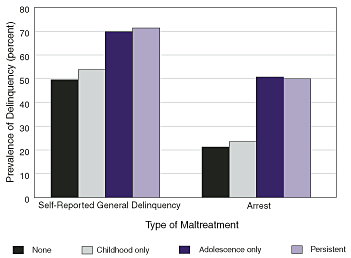
The relationship to delinquency is intriguing. Figure 2 presents self-reported and official arrest data on the prevalence of delinquency for four groups of youth: those who were never maltreated, those who were maltreated in childhood only, those who were maltreated in adolescence only, and those who were persistently maltreated. For self-reported general delinquency that occurs from ages 16 to 18,4 the subjects who were maltreated during childhood only were not at significantly greater risk for delinquency (53.8 percent) than those who were never maltreated (49.6 percent). Subjects maltreated during adolescence, however, were at significantly greater risk. The delinquency level for the adolescence-only group (69.8 percent) was significantly higher than that for those who were never maltreated, and the delinquency level for those persistently maltreated – in both childhood and adolescence – was the highest (71.4 percent). The same pattern of results applies to other self-reported measures of delinquency: drug use, violent crime, and street crime (Ireland, Smith, and Thornberry, 2002). For official arrest records, 21.3 percent of youth who were never maltreated had arrest records and 23.5 percent of youth who were maltreated in childhood only had arrest records. In contrast, 50.7 percent of youth maltreated in adolescence had arrest records and 50.0 percent of youth maltreated in both developmental stages had been arrested. The latter rates are significantly higher than the rate for those never maltreated.
Figure 2: Maltreatment and Delinquency
Gangs
The Rochester project also investigated how gang membership influences
adolescent development. The results have recently been published in
Gangs and Delinquency in Developmental Perspective (Thornberry et
al., 2003). Key findings are summarized here, as are findings from the
Denver Youth Survey.
Approximately 30 percent of the Rochester subjects joined a gang at some point during the 4-year period covering ages 14–18. The membership rate was virtually identical for boys (32 percent) and girls (29 percent). Gang membership turned out to be a rather fleeting experience for most of these youth. Half of the male gang members reported being in a gang for 1 year or less, and only 7 percent reported being a gang member for all 4 years. Two-thirds (66 percent) of the females were in a gang for 1 year or less and none reported being a member for all 4 years.
Although fleeting, gang membership had a tremendous impact on the lives of these youth. Gang members – both male and female – accounted for the lion's share of all delinquency. Although gang members were only 30 percent of the studied population, they were involved in 63 percent of all delinquent acts (excluding gang fights), 82 percent of serious delinquencies, 70 percent of drug sales, and 54 percent of all arrests.
Two explanations for the strong association between gang membership and delinquency are frequently raised. One focuses on the individual: gangs attract antisocial adolescents who will likely get into trouble whether or not they are in a gang. The second focuses on the group: individual gang members are not fundamentally different from nonmembers, but when they are in the gang, the gang facilitates their involvement in delinquency.
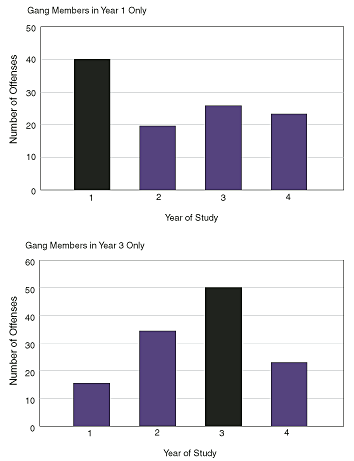
If the second explanation is correct, gang members should have higher rates of delinquency only during the period of membership, not before or after that period. That is precisely what the Rochester data showed, as illustrated in figure 3. This pattern is found across the 4-year period studied and is observed for various offenses, particularly violence, drug sales, and illegal gun ownership and use.
Figure 3: Self-Reported General Delinquency for Males Active in a Gang for 1 out of 4 Years Studied
The impact of being in a street gang is not limited to its short-term effect on delinquent behavior. It also contributes to disorderly transitions from adolescence to adulthood. As compared with individuals who were never members of a gang, male gang members were significantly more likely to drop out of school, get a girl pregnant, become a teenage father, cohabit with a woman without being married, and have unstable employment. Female gang members were significantly more likely to become pregnant, become a teenage mother, and to have unstable employment.
The relationship between gang membership and delinquency has also been investigated in the Denver Youth Survey and in other studies, including a companion project in Bremen, Germany (Esbensen and Huizinga, 1993; Esbensen, Huizinga, and Weiher, 1993; Hill et al., 1996; Huizinga, 1997, 1998; Huizinga and Schumann, 2001). Many of Rochester's findings about gang membership were replicated in Denver's high-risk sample.
For example, a fair proportion of both genders in Denver – 18 percent of the males and 9 percent of the females – have been gang members. Denver findings also reveal that gang members accounted for a very disproportionate amount of crime, as do findings in the other studies (Hill et al., 1996; Huizinga and Schumann, 2001). Denver male and female gang members accounted for approximately 80 percent of all serious and violent crime (excluding gang fights) committed by the sample. Further, over a 5-year period, these individuals committed the vast majority of crimes while they were gang members (e.g., 85 percent of their serious violent offenses, 86 percent of their serious property offenses, and 80 percent of their drug sale offenses). The social processes of being an active gang member clearly facilitate or enhance involvement in delinquent behavior.
The studies have also investigated the developmental processes leading to gang membership. In the Denver sample, although gang members and nonmembers were similar in many respects, there were substantial differences between gang members and other serious delinquents in the years preceding gang membership. In the years before they became gang members, individuals were more likely to be involved in higher levels of minor and serious delinquency and drug use, were more involved with delinquent peers, and were less involved with conventional peers. They also displayed weaker beliefs about the wrongfulness of delinquent behavior and a greater willingness to make excuses for involvement in delinquent behavior. The Rochester project found these variables, measured in early adolescence, to be significant risk factors for joining a gang as well (Thornberry et al., 2003). Poor school performance and brittle parent-child relationships also increased the risk of gang membership.
Because of the very high contribution of gang members to the volume of crime, developing effective gang prevention and intervention programs is important and urgent. Police data on gang crimes are helpful in identifying sites particularly affected by gang activity and in providing information for the evaluation of gang intervention activities. Among police departments that collect gang-related data, however, some define gang crimes as any crime committed by a gang member, others require that several gang members be involved in the offense, and yet others collect both kinds of information. The Denver study found that although gang members committed more group crimes than other delinquent youth, both before and after joining a gang, they also committed more offenses while alone than other youth. For example, more than one-third of their serious assaults were committed while alone (Huizinga, 1996). Thus, the measurement difference appears to be significant.
Given the large contribution of gang members to the total volume and location of crime, it would seem helpful for police departments to collect and separate both kinds of data to provide information about the nature of the local gang problem and to help plan local intervention activities. For more information on risk factors as they relate to gangs, see Strategic Risk-Based Response to Youth Gangs.
Responding to Delinquency
There are various ways to respond to juvenile crime, including
interventions through the juvenile justice system and the provision of
general social services or specialized prevention and treatment
programs. The Causes and Correlates studies have investigated these
different strategies, and the longitudinal results suggest alternative
strategies.
Arrest
The Denver study conducted several examinations of the impact of arrest
using various analytical strategies (Esbensen, Thornberry, and Huizinga,
1991; Huizinga and Esbensen, 1992; Huizinga, Esbensen, and Weiher, 1996;
Huizinga et al., 2003). The findings from these studies are quite
consistent. In general, arrest has little impact on subsequent
delinquent behavior, and when it does have an impact, it is most likely
an increase in future delinquent behavior. These findings are in
agreement with several other studies of the impact of arrest (Klein,
1986; Sherman et al., 1997). In addition, those who are arrested and
incarcerated as juveniles are substantially more likely to be
incarcerated as adults (Huizinga, 2000).
There are different possible explanations for these findings. For example, those arrested may be more serious offenders who are on a different life trajectory than delinquents who are not arrested. However, arrest and sanctioning do not appear to have had the desired effect on the future offending of many delinquent youth. It should be noted that arrest and sanctions need not demonstrate an ameliorative effect to justify their use because the need to protect public safety, perceived needs for retribution, and the influence of these actions on general deterrence within the population cannot be disregarded. Nevertheless, the findings do suggest that arrest and subsequent sanctions generally have not been a particularly viable strategy for the prevention of future delinquency and that other alternatives are needed. The findings also suggest that the use of the least restrictive sanctions, within the limits of public safety, and enhanced reentry assistance, monitoring, and support may reduce future delinquency.
Given these general observations, it also must be observed that progress has been made and continues to be made. There are some intervention programs within the juvenile justice system that have been shown to reduce future delinquency; other promising programs are currently being evaluated (Aos et al., 2001; Howell, 2003; Huizinga and Mihalic, 2003; Lipsey and Wilson, 1998; Mihalic et al., 2001; U.S. Department of Health and Human Services, 2001).
Utilization of Services
Several service-providing agencies can potentially help both youth
involved in delinquency and their families. These agencies include the
juvenile justice system and external agencies such as schools and social
services. Are they utilized? The Pittsburgh Youth Study investigated
this question by examining the extent to which the parents of delinquent
boys received help for dealing with their problems (Stouthamer-Loeber,
Loeber, and Thomas, 1992; Stouthamer-Loeber et al., 1995). The study
considered help received from anyone (including lay people) and from
professionals (especially mental health professionals). In general,
seeking help for behavior problems was twice as common for the oldest
boys as compared with the youngest (21 percent versus 11 percent,
respectively). In 25 percent of the cases, however, seeking help
resulted in only one contact with a help provider, and it is doubtful
that positive results were achieved in one session.
Programs within the juvenile justice system have reduced future delinquency.
The percentage of parents who sought any help – help for behavior problems or help from mental health professionals – increased with the seriousness of the delinquency. However, less than half of the parents of seriously delinquent boys received any help, and only one-quarter of the parents of these boys received help from a mental health professional (Stouthamer-Loeber, Loeber, and Thomas, 1992).
Help in schools
Division of the Pittsburgh sample into four groups (nondelinquents,
persistent nonserious offenders, persistent property offenders, and
persistent violent offenders) showed that all three persistent offender
groups were placed in special education classes for learning problems at
the same rate as non-delinquents (less than 10 percent). However, more
of the persistently delinquent boys, as compared with the non-delinquent
boys, were placed in classes for behavior problems; this was
particularly true for the violent boys (22.3 percent versus 2.8 percent
of the nondelinquents). Nevertheless, three-quarters (77.7 percent) of
the persistent violent offenders were never placed in a class for
behavior problems, and two-thirds were never placed in any special
class.
It is commonly believed that certain groups of boys receive a disproportionate share of resources from various agencies. When researchers examined persistent property and persistent violent offenders, they found that just under half did not receive any help inside or outside of school (about 48 percent), and only 15.4 percent of the persistent property offenders and persistent violent offenders received help from mental health professionals in addition to help in school.
Steps in developmental pathways
Stouthamer-Loeber and colleagues (1995) compared movement along the
developmental pathways described above with seeking help for services.
In general, the higher the advancement in multiple pathways, the higher
the chances that help was sought. An early onset of disruptive
behaviors, however, did not increase the frequency at which help was
sought.
Court contact
Comparison of court-involved boys with those who had not had
court contact showed that the former group received more intensive help.
It may be possible that court intervention brought the necessity for
help to the parents' attention. Only 17 percent of the boys' parents
sought help before the year in which their boys were referred to the
juvenile court.
In summary, the development of disruptive and delinquent behaviors was largely left unchecked by parents and helping agencies. These findings have important implications for policymakers and planners of preventive interventions. Merely having programs available may not be adequate; outreach to the most seriously delinquent youth and their families may also be essential.
Implications for Prevention
Although the projects of the Program of Research on the Causes and
Correlates of Delinquency were not designed to evaluate preventive
interventions, program findings have important implications for the
design of appropriate interventions. Knowledge of developmental pathways
is relevant for interventions, in that pathways reflect current problem
behaviors in the context of the history of problem behaviors. Knowledge
of pathways also helps identify future problem behaviors that need to be
prevented.
The studies examined how long disruptive behaviors had been apparent in boys who eventually were referred to the juvenile court for an index offense5 (Office of Juvenile Justice and Delinquency Prevention, 1998). The average age at which individuals took their first step in any of the pathways was approximately 7; moderately serious problem behavior began at about age 9.5 and serious delinquency at about age 12. The average age at which youth first came into contact with the juvenile court was 14.5. Thus, approximately 71/2 years elapsed between the earliest emergence of disruptive behavior and the first contact with the juvenile court. It should be noted that delinquent boys who were not referred to the juvenile court also tended to have long histories of problem behaviors.
Research findings from all three Causes and Correlates projects show that youth who start their delinquency careers before age 13 are at higher risk of becoming serious and violent offenders than those who start their delinquency careers later (Huizinga, Esbensen, and Weiher, 1994; Krohn et al., 2001; Loeber and Farrington, 1998, 2001). These results imply that preventive interventions to reduce offending should be available at least from the beginning of elementary school-age onward. However, it is important to be mindful of the results of the studies' investigation of childhood offending. Many of the aggressive children did not progress to serious involvement in serious juvenile crime. This suggests that great care is needed in the design of intervention programs for aggressive children. Not all programs are benign, and some may lead to or exacerbate later problems (Dishion, McCord, and Poulin, 1999).
Further research is needed to identify those individuals whose childhood aggression leads to violent behavior later in life. Intervention programs for aggressive children must be developed, and the outcomes for the children served by these programs must be carefully evaluated. The pathways model may be particularly helpful in designing these interventions. Overall, it seems that the judicious use of early interventions known to have long-term effectiveness is warranted.
In addition, although it is “never too early” to try to prevent offending, it is also “never too late” to intervene and attempt to reduce the risk of recidivism for serious offending (Loeber and Farrington, 1998). There is a complex relationship between when individuals begin to commit offenses and how long they persist. A full range of developmentally appropriate and scientifically validated programs is needed.
The Causes and Correlates results regarding the impact of maltreatment are consistent with the importance of developmentally appropriate interventions. It does not appear that childhood-only maltreatment, as long as it does not continue into adolescence, is a risk factor for delinquency. Sources of resiliency, including, perhaps, effective services, must come into play to help children overcome this adversity. Understanding these resiliency processes is an important goal for future research, as these processes have important implications for the design of programs.
Maltreatment that occurs during adolescence, however, appears to be a substantial risk factor for later delinquency. This suggests the need for enhanced services for adolescent victims and, in particular, for services that reduce the chances of delinquent behavior. As Garbarino (1989) has pointed out, however, few treatment programs for adolescent victims exist, and it is often quite difficult to enroll adolescent victims and their families in the available programs. Much greater attention needs to be devoted to the topic of adolescent maltreatment and how it functions as a risk factor for delinquency.
A general strategy for reducing youth crime also needs to be mindful of the sizeable impact that gang membership has on serious and violent delinquency. Working directly with gangs, however, has not yet proved successful and can even be counterproductive. It may be more productive for juvenile justice practitioners to use gang membership as a marker variable and send gang members, on an individual basis, to programs for serious delinquency that are proven effective (see Thornberry et al., 2003). Several excellent summaries identify and describe these programs (see Howell, 2003; Huizinga and Mihalic, 2003; Loeber and Farrington, 1998 (Part II); Mihalic et al., 2001; U.S. Department of Health and Human Services, 2001). Regardless of whether an indirect approach is used or whether gang members are sent individually to proven effective programs, intervening with gang members is an important component in reducing a community's level of youth crime and violence.
Notes
1. Longer, more detailed summaries of these studies can be found in
Taking Stock of Delinquency: An Overview of Findings from Contemporary
Longitudinal Studies (Thornberry and Krohn, 2003).
2. Drug use included use of marijuana, inhalants, and hard drugs. School
problems included poor grades and dropping out of school. Mental health
problems were indicated by scores in the top 10 percent of either an
emotional problem or non-delinquent behavioral problem measure.
3. For information about other topics reviewed by the Causes and
Correlates Studies, see Program of Research on the Causes and Correlates
of Delinquency.
4. The authors focused on these ages to preserve proper temporal order,
but the pattern of results presented here applies more generally.
5. The index crimes of the Federal Bureau of Investigation include
homicide, rape, robbery, aggravated assault, burglary, larceny, auto
theft, and arson.
References
Aos, S., Phipps, P., Barnoski, R., and Lieb, R. 2001. The Comparative Costs and Benefits of Programs To Reduce Crime, ver. 4.0. Olympia, WA: Washington State Institute for Public Policy.
Dishion, T.J., McCord, J., and Poulin, F. 1999. When interventions harm: Peer groups and problem behavior. American Psychologist 54(9):755–764.
Esbensen, F.A., and Huizinga, D. 1993. Gangs, drugs, and delinquency in a survey of urban youth. Criminology 31(4):565–589.
Esbensen, F.A., Huizinga, D., and Weiher, A.W. 1993. Gang and non-gang youth: Differences in explanatory factors. Journal of Contemporary Criminal Justice 9(2):94–116.
Esbensen, F.A., Thornberry, T.P., and Huizinga, D. 1991. Arrest and delinquency. In Urban Delinquency and Substance Abuse, edited by D. Huizinga, R. Loeber, and T.P. Thornberry. Washington, DC: U.S. Department of Justice, Office of Justice Programs, Office of Juvenile Justice and Delinquency Prevention.
Espiritu, R., Huizinga, D., Loeber, R., and Crawford, A. 2001. Epidemiology of self-reported delinquency. In Child Delinquents, edited by R. Loeber and D.F. Farrington. Thousand Oaks, CA: Sage Publications.
Garbarino, J. 1989. Troubled youth, troubled families: The dynamics of adolescent maltreatment. In Child Maltreatment: Theory and Research on the Causes and Consequences of Child Abuse and Neglect, edited by D. Cicchetti and V. Carlson. New York, NY: Cambridge University Press.
Hill, K.G., Hawkins, J.D., Catalano, R.F., Kosterman, R., Abbott, R., and Edwards, T. 1996. The role of gang membership in delinquency, substance use, and violent offending. Paper presented at the annual meeting of the American Society of Criminology, Chicago, IL.
Howell, J.C. 2003. Preventing and Reducing Juvenile Delinquency: A Comprehensive Framework. Thousand Oaks, CA: Sage Publications.
Huizinga, D. 1996. The influence of peers, gangs and co-offending on violence. Unpublished report submitted to the U.S. Department of Justice, Office of Justice Programs, Office of Juvenile Justice and Delinquency Prevention, Washington, DC.
Huizinga, D. 1997. Gangs and the volume of crime. Paper presented at the annual meeting of the Western Society of Criminology, Honolulu, HI.
Huizinga, D. 1998. Developmental risk factors for gang membership. Paper presented at the annual meeting of the Western Society of Criminology, Newport Beach, CA.
Huizinga, D. 2000. Who goes to prison? Paper presented at the Annual Conference on Criminal Justice Research and Evaluation, Washington, DC.
Huizinga, D., and Elliott, A. 2003. The effect of arrest on personal characteristics related to subsequent delinquency. Unpublished report submitted to the U.S. Department of Justice, Office of Justice Programs, Office of Juvenile Justice and Delinquency Prevention, Washington, DC.
Huizinga, D., and Esbensen, F.A. 1992. An arresting view of juvenile justice. School Safety 3:15–17.
Huizinga, D., Esbensen, F.A., and Weiher, A.W. 1994. Examining developmental trajectories in delinquency using accelerated longitudinal designs. In Cross-National Longitudinal Research on Human Development and Criminal Behavior, edited by H.-J. Kerner and E.G.M. Weitekamp. New York, NY: Kluwer Academic Publishers.
Huizinga, D., Esbensen, F.A., and Weiher, A.W. 1996. The impact of arrest on subsequent delinquent behavior. In Annual Report of the Program of Research on the Causes and Correlates of Delinquency, edited by R. Loeber, D. Huizinga, and T.P. Thornberry. Washington, DC: U.S. Department of Justice, Office of Justice Programs, Office of Juvenile Justice and Delinquency Prevention.
Huizinga, D., and Espiritu, R. 1999. Delinquent behavior of youth in the juvenile justice system: Before, during, and after different court dispositions. Unpublished report prepared for the National Center for Juvenile Justice, National Juvenile Court Judges Association, Pittsburgh, PA.
Huizinga, D., and Jakob-Chien, C. 1998. The contemporaneous co-occurrence of serious and violent juvenile offending and other problem behaviors. In Serious and Violent Juvenile Offenders: Risk Factors and Successful Interventions, edited by R. Loeber and D. Farrington. Thousand Oaks, CA: Sage Publications.
Huizinga, D., Loeber, R., and Thornberry, T.P. 1993. Delinquency, drug use, sex, and pregnancy among urban youth. Public Health Reports 108(Supplement 1):90–96.
Huizinga, D., Loeber, R., Thornberry, T.P., and Cothern, L. 2000. Co-occurrence of Delinquency and Other Problem Behaviors. Bulletin. Washington, DC: U.S. Department of Justice, Office of Justice Programs, Office of Juvenile Justice and Delinquency Prevention.
Huizinga, D., and Mihalic, S. 2003. The prevention of juvenile delinquency. In New Approaches in Crime Prevention, edited by H. Kury and J. Obergfell-Fuchs. Berlin, Germany: Weisse Ring.
Huizinga, D., and Schumann, K. 2001. Gang membership in Bremen and Denver: Comparative longitudinal data. In The Eurogang Paradox, edited by M.W.Klein, H.-J. Kerner, C.L. Maxson, and E.G.M. Weitekamp. London, England: Kluwer Academic Publishers.
Huizinga, D., Schumann, K., Ehret, B., and Elliott, A. 2003. The effect of juvenile justice system processing on subsequent delinquent behavior: A cross-national study. Unpublished report submitted to the U.S. Department of Justice, Office of Justice Programs, National Institute of Justice.
Ireland, T., Smith, C.A., and Thornberry, T.P. 2002. Developmental issues in the impact of child maltreatment on later delinquency and drug use. Criminology 40(2):359–399.
Kelley, B.T., Loeber, R., Keenan, K., and DeLamatre, M. 1997. Developmental Pathways in Disruptive and Delinquent Behavior. Bulletin. Washington, DC: U.S. Department of Justice, Office of Justice Programs, Office of Juvenile Justice and Delinquency Prevention.
Klein, M. 1986. Labeling theory and delinquency policy–An empirical test. Criminal Justice and Behavior 13:47–79.
Krohn, M.D., Thornberry, T.P., Rivera, C., and LeBlanc, M. 2001. Later delinquency careers. In Child Delinquents: Development, Intervention, and Service Needs, edited by R. Loeber and D.P. Farrington. Thousand Oaks, CA: Sage Publications.
Lipsey, M.W., and Wilson, D.B. 1998. Effective intervention with serious juvenile offenders: A synthesis of research. In Serious and Violent Juvenile Offenders: Risk Factors and Successful Interventions, edited by R. Loeber and D. P. Farrington. Thousand Oaks, CA: Sage Publications, pp. 313–345.
Loeber, R., DeLamatre, M., Keenan, K., and Zhang, Q. 1998. A prospective replication of developmental pathways in disruptive and delinquent behavior. In Methods and Models for Studying the Individual, edited by R. Cairns, L. Bergman, and J. Kagan. Thousand Oaks, CA: Sage Publications.
Loeber, R., and Farrington, D.P., eds. 1998. Serious and Violent Juvenile Offenders: Risk Factors and Successful Interventions. Thousand Oaks, CA: Sage Publications.
Loeber, R., and Farrington, D.P., eds. 2001. Child Delinquents: Development, Intervention, and Service Needs. Thousand Oaks, CA: Sage Publications.
Loeber R., and Hay, D.F. 1997. Key issues in the development of aggression and violence from childhood to early adulthood. Annual Review of Psychology 48:371–410.
Loeber, R., Keenan, K., and Zhang, Q. 1997. Boys' experimentation and persistence in developmental pathways toward serious delinquency. Journal of Child and Family Studies 6:321–357.
Loeber, R., Wei, E., Stouthamer-Loeber, M., Huizinga, D., and Thornberry, T.P. 1999. Behavioral antecedents to serious and violent juvenile offending: Joint analyses from the Denver Youth Survey, Pittsburgh Youth Study, and the Rochester Youth Development Study. Studies in Crime and Crime Prevention 8(2):245–263.
Loeber, R., Wung, P., Keenan, K., Giroux, B., Stouthamer-Loeber, M., Van Kammen, W.B., and Maughan, B. 1993. Developmental pathways in disruptive child behavior. Development and Psychopathology 5:101–132.
Mihalic, S., Irwin, K., Elliott, D., Fagan, A., and Hansen, D. 2001. Blueprints for Violence Prevention. Bulletin. Washington DC: U.S. Department of Justice, Office of Justice Programs, Office of Juvenile Justice and Delinquency Prevention.
Office of Juvenile Justice and Delinquency Prevention. 1998. Serious and Violent Juvenile Offenders. Bulletin. Washington, DC: U.S. Department of Justice, Office of Justice Programs, Office of Juvenile Justice and Delinquency Prevention.
Sherman, L.W., Gottfredson, D., MacKenzie, D., Eck, J., Reuter, P., Bushway, S. 1997. Preventing Crime: What Works, What Doesn't, What's Promising. A Report to the United States Congress. Washington, DC: U.S. Department of Justice, Office of Justice Programs, National Institute of Justice.
Smith, C.A., and Thornberry, T.P. 1995. The relationship between childhood maltreatment and adolescent involvement in delinquency. Criminology 33(4):451–481.
Stouthamer-Loeber, M., Loeber, R., Homish, D.L., and Wei, E. 2001. Maltreatment of boys and the development of disruptive and delinquent behavior. Development and Psychopathology 13:941–955.
Stouthamer-Loeber, M., Loeber, R., and Thomas, C. 1992. Caretakers seeking help for boys with disruptive delinquent behavior. Comprehensive Mental Health Care 2:159–178.
Stouthamer-Loeber, M., Loeber, R., Van Kammen, W.B., and Zhang, Q. 1995. Uninterrupted delinquent careers: The timing of parental helpseeking and juvenile court contact. Studies on Crime and Crime Prevention 4(2), 236–251.
Stouthamer-Loeber, M., Wei, E., Homish, D.L., and Loeber, R. 2002. Which family and demographic factors are related to both maltreatment and persistent serious juvenile delinquency? Children's Services: Social Policy, Research, and Practice 5(4):261–272.
Thornberry, T.P., and Krohn, M.D. 2003. Taking Stock of Delinquency: An Overview of Findings from Contemporary Longitudinal Studies. New York, NY: Kluwer/Plenum Publishers.
Thornberry, T.P., Krohn, M.D., Lizotte, A.J., Smith, C.A., and Tobin, K. 2003. Gangs and Delinquency in Developmental Perspective. Cambridge, England: Cambridge University Press.
Thornberry, T.P., Ireland, T.O., and Smith, C.A. 2001. The importance of timing: The varying impact of childhood and adolescent maltreatment on multiple problem outcomes. Development and Psychopathology 13:957–979.
Tolan, P.H., Gorman-Smith, D., and Loeber, R. 2000. Developmental timing of onsets of disruptive behaviors and later delinquency of inner-city youth. Journal of Child and Family Studies 9:203–230.
U.S. Department of Health and Human Services. 2001. Youth Violence: A Report of the Surgeon General. Rockville, MD: U.S. Department of Health and Human Services.
Widom, C.S. 1989. The cycle of violence. Science 244(4901):160–166.
Zingraff, M.T., Leiter, J., Myers, K.A., and Johnsen, M.C. 1993. Child maltreatment and youthful problem behavior. Criminology 31(2):173–202.
This feature: Thornberry, T.P., David Huizinga, D. and Loeber, R. (2004) Causes and Correlates: Findings and Implications. Juvenile Justice, Volume IX No.1, September 2004


